Discussion with a veteran Hack Jam host from the community.
Note: some calls may not have guest speakers.
Hear about their experience, challenges and lessons learned.
Questions?
What makes a good hack jam?
A successful hack jam lives at the intersection of people's passions and interests to go somewhere new.
Engage participants beforehand
Know who you're doing this for. If people have the wrong idea about your event, make sure they find that out beforehand.
Think about what skills you need in the room. Invite people who can help in valuable ways.
Have conversations with participants before the event:
What are their goals?
What are they interested in making and doing?
How can your event serve them?
Craft a good design challenge
A design challenge is a question or a problem that you set out to address together. You should know who you are building solutions for. For example:
How can we add value for journalists telling a story using live web content?
What games can we make that teach youth an important web skill?
How can we harness sensor signals for the visually-impaired to navigate space?
When everyone knows why they are there and has a stake in the challenge, you'll have a more meaningful event.
Use clear and engaging language to describe your design challenge.
A "minimum viable prototype"
A "minimum viable prototype" is a useful framework and goal for a hack jam. You aim to produce something, even if very rough around the edges. Such as:
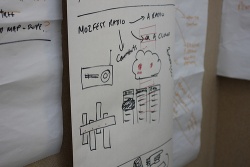
A napkin sketch
A blog post
A little bit of code
Set realistic but motivating goals. Check with the group throughout the event.
Encourage participants to go far, but don't leave people behind. Your job is to bring the group together and make sure everyone has a good time.
Tools and Techniques
Here are some fun ways to get participants working on ideas together:
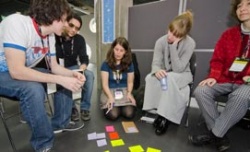
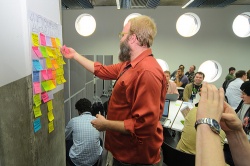
Work in small groups with diverse skill-sets. Encourage teams to walk around and see what other groups are making.